IMO Decarbonization: Implications for Caribbean Ports and Electric Utilities
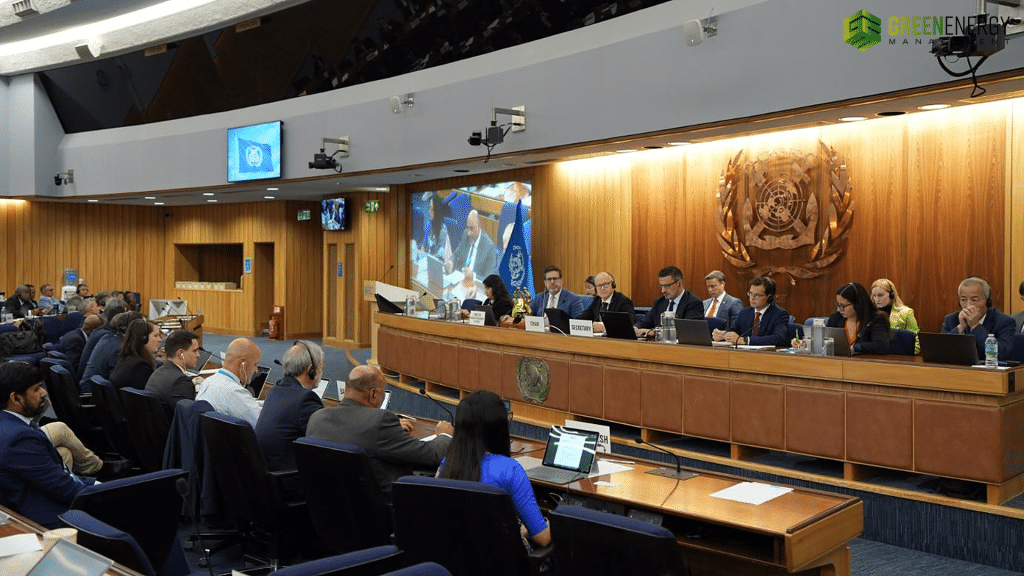
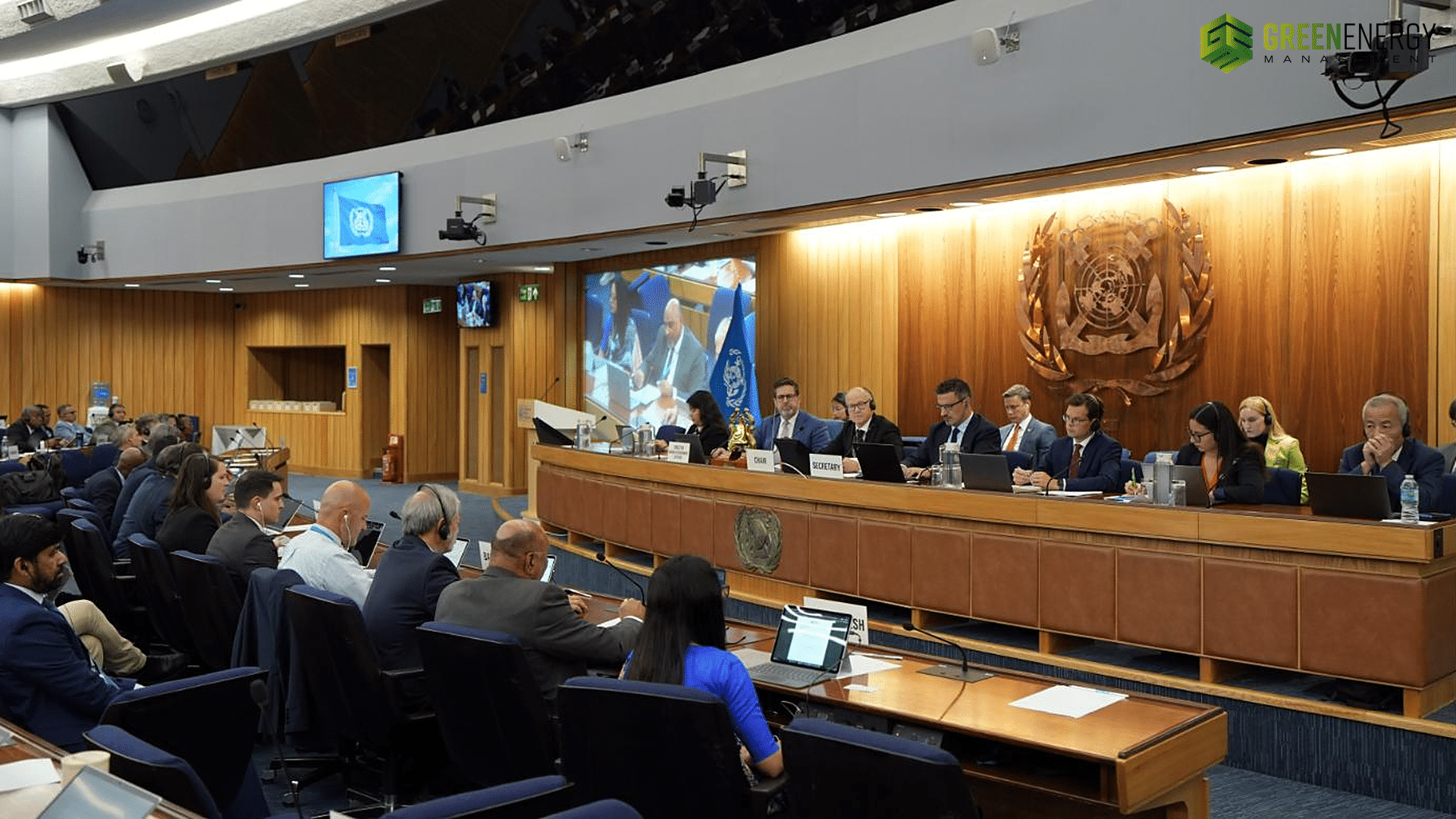
The global maritime energy transition continues to advance, with impacts extending beyond vessels to the ports, electric utilities, governments, and infrastructure that support them. Its direction continued to take shape during the 22nd session of the International Maritime Organization’s Intersessional Working Group on Reduction of Greenhouse Gas Emissions from Ships (ISWG-GHG 22), held at IMO Headquarters in London from September 1–4, 2026.
GEM Chief Executive Officer Ethan James attended as an Observer with the Antigua and Barbuda delegation, gaining first-hand insight into the discussions and considerations shaping the maritime transition.
ISWG-GHG 22 advanced discussions, but key elements of the developing IMO Net-Zero Framework remain under consideration. Interested delegations were invited to continue intersessional consultations toward greater convergence ahead of ISWG-GHG 23, scheduled for November 23–27, followed by MEPC 85 from November 30–December 3, 2026.
Global Direction, Caribbean Implications
GEM supports the IMO’s continuing efforts to reduce GHG emissions from international shipping. The 2023 IMO GHG Strategy sets an ambition to reach net-zero emissions from international shipping by or around 2050, with indicative checkpoints of at least 20%, striving for 30%, by 2030 and at least 70%, striving for 80%, by 2040, compared with 2008 levels. For Caribbean SIDS, these ambitions have significant implications for electricity demand, grid capacity, port electrification, renewable generation, energy storage, and future infrastructure investment.
Ethan’s observations at ISWG-GHG 22 highlighted the complexity of the transition, particularly around affordability, accessibility, and the scalability of future fuels. As he observed, the transition is not a “straight line.” For Caribbean countries, international decarbonization objectives must be aligned with baseload needs, existing generation assets, contractual obligations, regulatory frameworks, energy affordability, and broader national economic priorities.
Urgency and Practicality Must Advance Together
For GEM, successful decarbonization requires a practical transition—integrating cleaner technologies with existing systems in ways that reduce emissions while safeguarding reliability, affordability, resilience, and long-term economic performance.
Yet practicality cannot become delay. Uncertainty around future maritime fuels and vessel technologies does not mean every infrastructure decision must wait. Early preparation creates options, enabling investments to be phased deliberately as maritime requirements and technology pathways become clearer.
From Maritime Direction to Infrastructure Readiness
The IMO’s 2023 Strategy recognizes the important role of shore-side infrastructure in supporting reductions in emissions from shipping, identifying port development, shore-side power from renewable sources, supporting infrastructure for zero- or near-zero-GHG fuels and energy sources, and improved logistics among areas for consideration.
This is where global maritime ambition intersects with Caribbean infrastructure. Ports and electric utilities will need to consider how future maritime energy demand can be supported through generation, grid capacity, storage, and electrical infrastructure without compromising reliability or affordability.
From GEM’s perspective, translating evolving maritime requirements into practical Caribbean outcomes requires coordinated planning among governments, ports, electric utilities, shipping stakeholders, infrastructure developers, and other relevant parties based on project requirements. Solutions must be grounded in the technical, commercial, and operational realities of individual island systems.
The maritime transition will continue to evolve. For the Caribbean, the priority is to make informed infrastructure decisions today while preserving the flexibility to adapt as maritime requirements and technology pathways develop.
The opportunity is to prepare early, transition deliberately, and invest in infrastructure that strengthens Caribbean resilience and economic performance while positioning the region to respond to the maritime energy systems of tomorrow.
Photo adapted from International Maritime Organization (IMO), CC BY 4.0