Collaboration and regionalization are shaping the future of Caribbean ports.
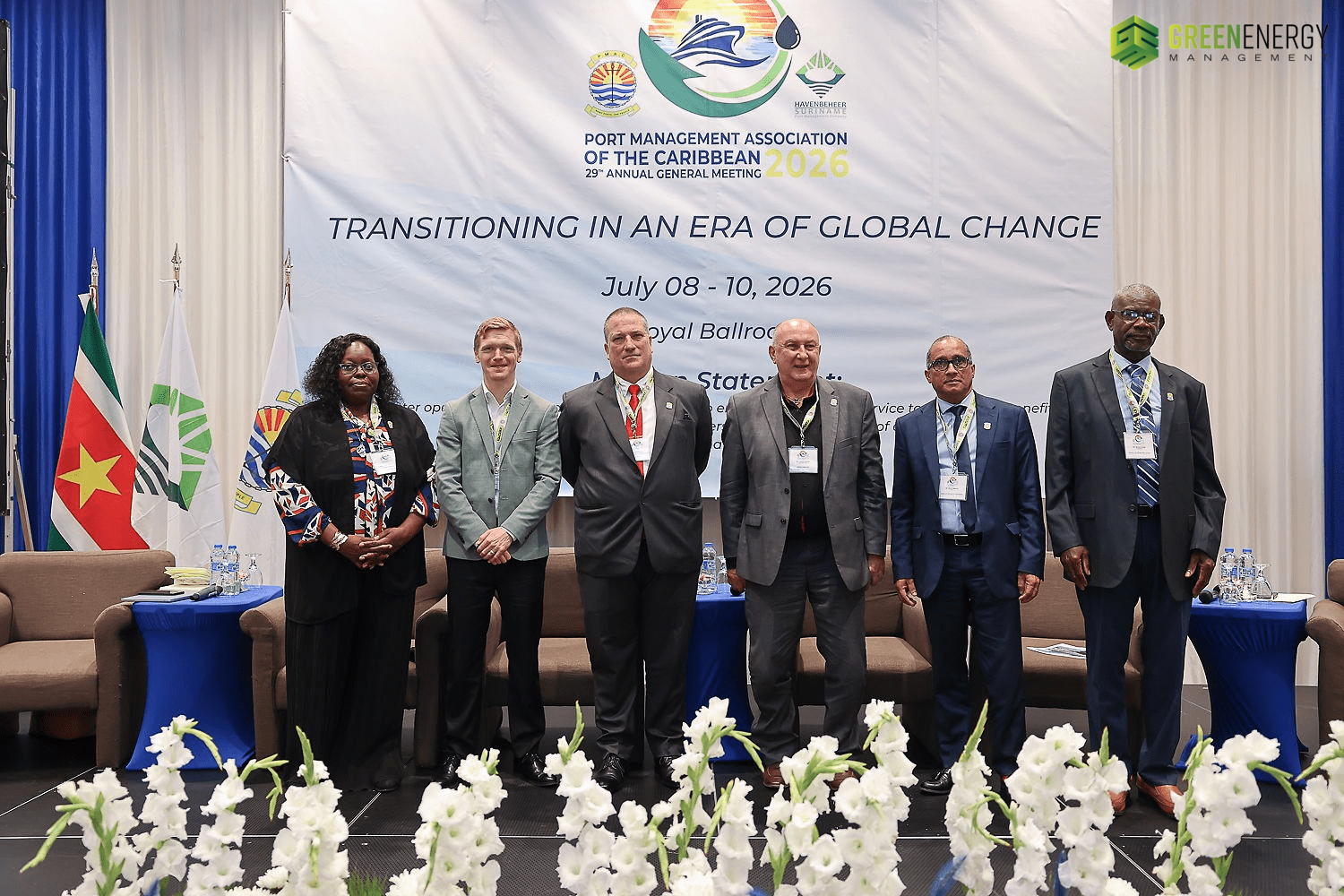
Green Energy Management (GEM) recently participated in the 29th Port Management Association of the Caribbean (PMAC) Annual General Meeting & Training, held in Paramaribo, Suriname, from July 6–10, 2026. Under the conference theme, “Transitioning in an Era of Global Change,” the event brought together Caribbean port authorities, policymakers, industry leaders, and maritime stakeholders to explore the opportunities and challenges shaping the future of regional port development.
Representing GEM were Chief Executive Officer Ethan James and Director of Business Development Halle Salmon, supported by representatives from GEM’s consortium of project execution partners—PowerCon, Syntropic Power, and Cavotec. Beyond participating in the conference, consortium members contributed to technical sessions and panel discussions on renewable energy transition, port electrification, and green shore power while engaging with regional stakeholders on the evolving priorities of Caribbean ports.
Reflecting on PMAC 2026, one message consistently emerged: the future of Caribbean ports will increasingly depend on stronger regional collaboration. As ports respond to changing trade patterns, climate resilience, evolving maritime regulations, technological advancement, and sustainability objectives, successful infrastructure development will require closer coordination between port authorities, governments, technology providers, project developers, financiers, and other strategic partners. Delivering future-ready ports will depend not only on innovation, but also on coordinated planning, practical implementation, and long-term partnerships.
Reflecting on the conference, GEM Chief Executive Officer Ethan James noted:
“One of the strongest themes emerging from PMAC 2026 was the growing importance of regionalization. The long-term success of many Caribbean ports, and the broader economies they support, will be shaped by our willingness to recognise our unique geographical realities and allow that understanding to influence how we plan and develop individually and collectively. The strategic advantages of regionalization cannot be overstated. Not only does greater regional collaboration create economies of scale and reduce risk, but it also creates opportunities for initiatives that individual jurisdictions may find difficult to achieve independently. Developing a robust business plan is therefore a critical first step in future-proofing these essential infrastructures. It establishes the economic case for investment while supporting stakeholder coordination, effective planning, project financing, and ultimately successful project delivery.”
PMAC 2026 reaffirmed GEM’s commitment to working collaboratively with Caribbean ports, governments, industry partners, and regional institutions to advance practical and financeable infrastructure solutions. The conference reinforced that the region’s transition toward more resilient and sustainable ports will depend not only on technology, but on regional collaboration, coordinated planning, and successful implementation.